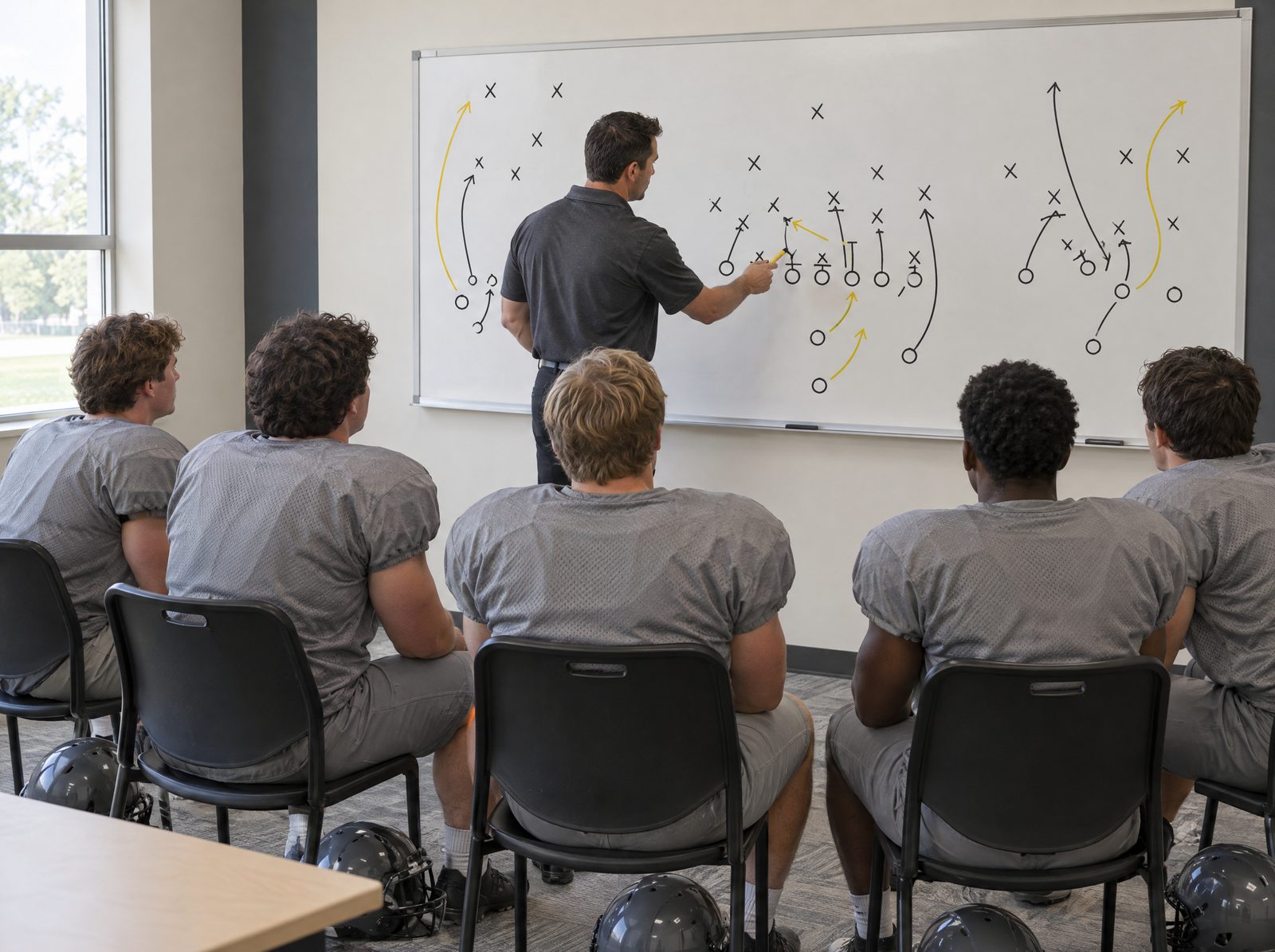
Power, Counter and Trap, position by position.
Rule tables for every lineman and back, 12 diagrams against four fronts, stunt and blitz adjustments, common mistakes and coaching cues, so every player knows his block before the snap.

For offensive line coaches, youth through small college
A coach's playbook for Power, Counter and Trap: blocking rules by position, diagrams against four fronts, a 3-week install plan and 20 drills.
$97 $37, one-time. One playbook that replaces the scattered whiteboard notes and rule sheets in your line room.
Instant access
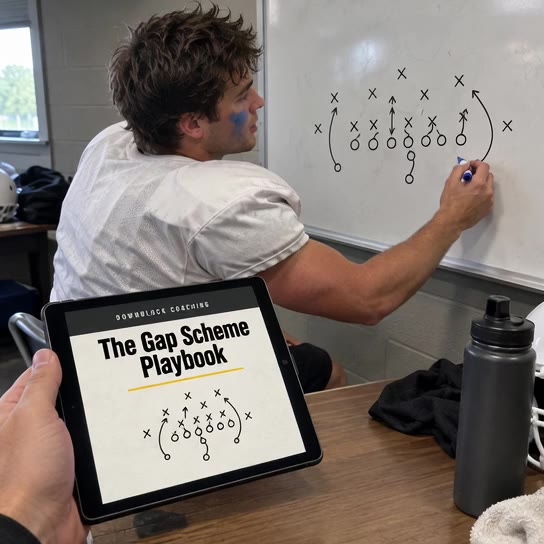
Printable PDF. 78 letter-size pages you can print whole or one page at a time.
Any device. Opens on your phone, tablet or laptop, at home or on the practice field.
Clipboard ready. Rule tables, install days and a game-day checklist made to print.
Power, Counter and Trap. Three gap schemes drawn against four common fronts.
"I know Power. I just can't get five kids to block it the same way twice."
"My guard pulls, runs into the tackle and the play is dead in the backfield."
"The double team stalls and the linebacker walks right into the hole."
"They show a different front on Friday and half my line blocks the wrong guy."
"I inherited the line with two weeks until the opener and no install plan."
"Every clinic note I own says something different, and my kids can hear it."
"I draw the play on the whiteboard, and by the second rep it is gone."
None of this means your linemen are not trying. It usually means they were handed plays to memorize instead of rules they can apply. A play only works against the front you drew it against. A rule works against whatever lines up across from them. When five linemen share the same short rules and the same words, they block the same way twice, and they can tell you why.
You get home after practice, open a notebook and start drawing Power again. Against the over front. Then the under. Then you wonder what the guard does if the 3 technique slants, and you are not sure the answer you wrote last week still matches the one in your head.
If you spend 30 minutes a night redrawing plays and rewriting rule sheets, five nights a week, that is two and a half hours every week that do not go to watching film, planning reps or getting some sleep. If your season runs ten weeks, that is 25 hours spent rebuilding the same three plays.
And the cost on the field is bigger. If every lineman learned his block from a different drawing, the double team splits, the puller runs into traffic, and the play you spent all week on dies in the backfield. One shared playbook gives those hours back and gives your room one language.

The Gap Scheme Playbook is built on one idea: teach every lineman a short rule he can apply to any front, then layer the schemes so each week builds on the last.
One rule per position, every front. Each lineman learns a short rule in the order "gap, down, backer" and applies it to whatever lines up across from him. The 4-3 over, 4-3 under, 3-4 and 4-2-5 are all drawn so you can check every block.
Learn it once, use it three times. The front side of Counter is blocked exactly like Power, and the pulling technique carries over to Trap. Your players build on what they already own instead of starting over.
Install in layers, at the right contact level. One scheme per week, with walk-through, indy, half-line and team periods, and every drill tagged with its contact level (Air, Bags, Control Contact or Thud). Every block is taught above the waist, hands inside, head out of contact.
One language from the whiteboard to the sideline. The same terms run through the rule tables, the drills, the walk-through script, the game-day checklist and the 37-term glossary, so the words you use on Tuesday are the words your linemen hear on Friday.
Power right
| Pos. | Example: Power right |
|---|---|
| TE | Gap, down, backer |
| RT | Gap, down, backer |
| RG | Gap, down, backer |
| C | Back |
| LG | Pull and lead through the hole to the play side linebacker |
| LT | Hinge |
| FB | Kick out the end man on the line |
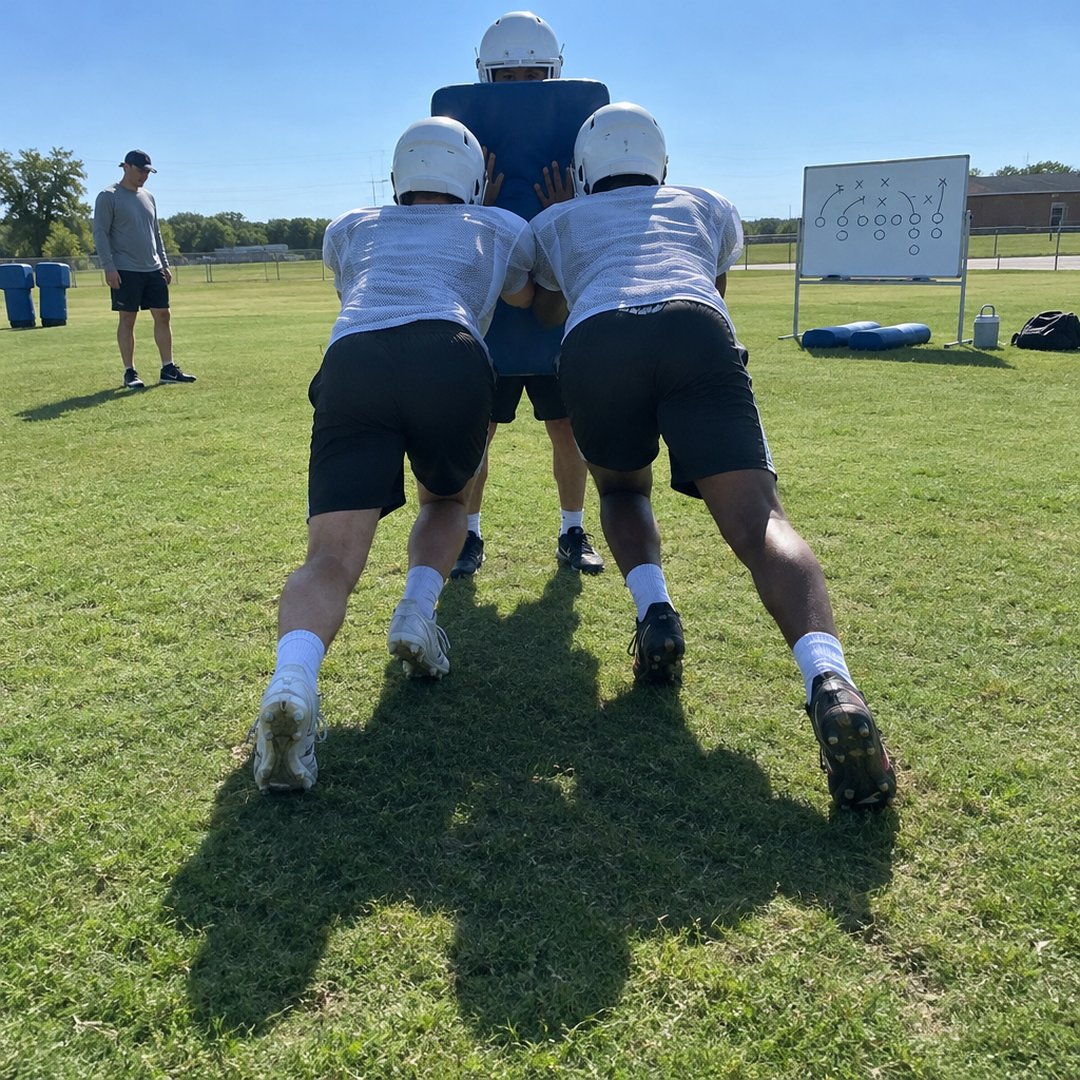
1. Read the foundation chapters. Start with safety, the plain-words vocabulary, stance and start, the double team and pulling. The playbook asks you to read the first six chapters yourself before you teach anything.
2. Pick your terms and your first scheme. Use the "coach's homework" checklist to choose your terminology, formations and stance, and to check your rule book. For most teams the first scheme is Power.
3. Install one scheme per week. Follow the 15 practice days: Power in week 1, Counter in week 2, Trap and the full package in week 3. With less practice time, stretch it to five or six weeks.
4. Print the checklist and call it on Friday. Take the game-day checklist and the sideline tally to the game, then grade the line after the game on assignment, technique and result.

Thirteen chapters, from the first safety talk to the sideline tally, plus a list of the public sources the safety chapter follows. Here is what each part gives you.
Rule tables for every lineman and back, 12 diagrams against four fronts, stunt and blitz adjustments, common mistakes and coaching cues, so every player knows his block before the snap.
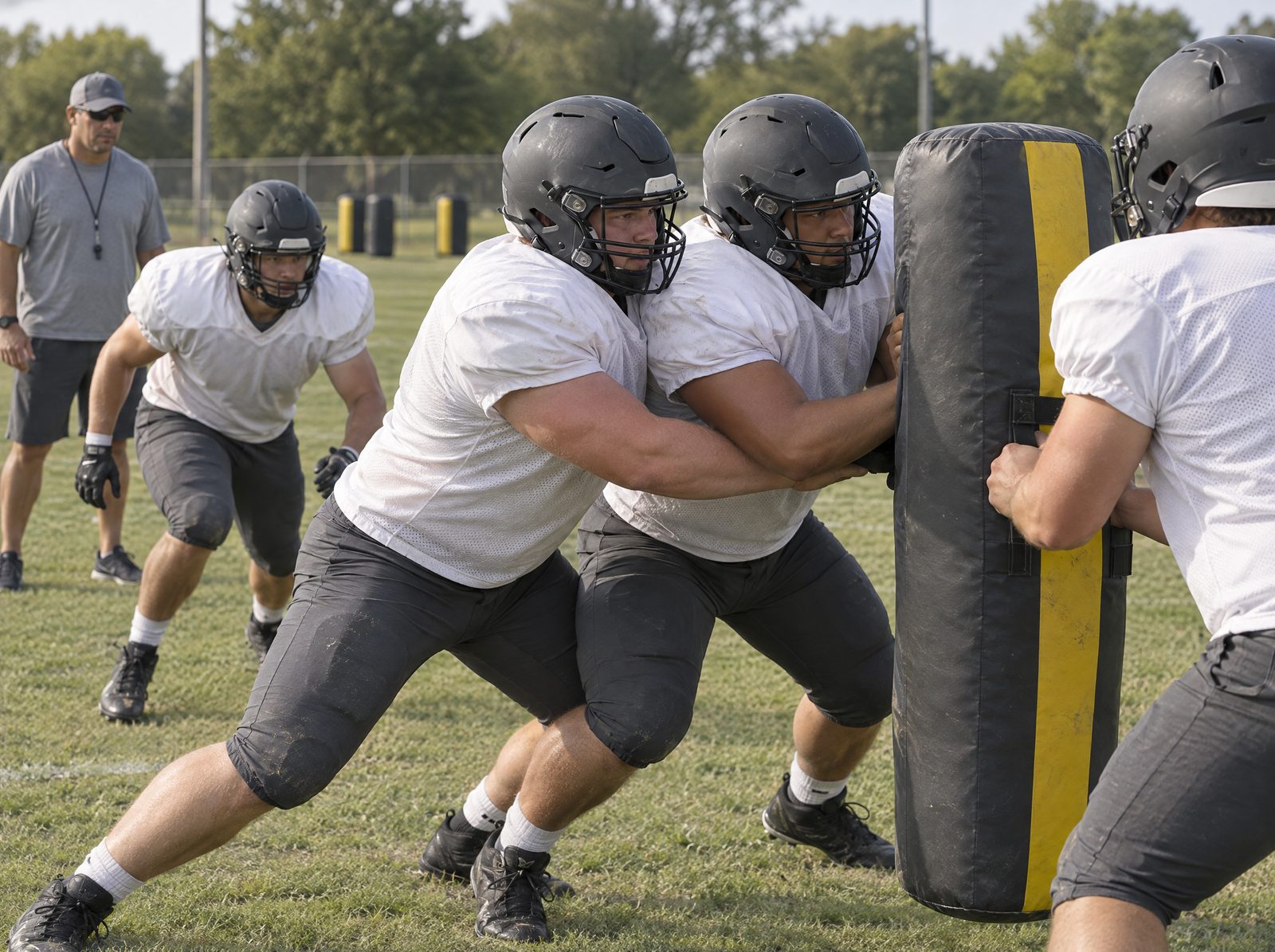
Hip to hip, when to climb, open pull vs skip pull, the flat path and reading the kick-out, with 8 diagrams, so your doubles move people and your pullers arrive on time.

15 practice days with walk-through, indy, half-line and team periods, a weekly checklist and a front recognition routine, so you know exactly what to teach each day.

Every drill with a diagram, level, setup, reps and coaching points, plus a 21-item sideline checklist and 37 terms, so practice and Friday night run on the same language.
How to Use This Playbook (3 pages). How to read the diagrams, how to use the book with your team, and what to teach first at the youth, middle school, high school and small college levels.
Safety and Legal Blocking (4 pages). Hands inside and head out of the block, the Levels of Contact language, a checklist for the blocking below the waist, chop block and clipping rules at your level, and concussion response.
Gap Schemes in Plain Words (3 pages). The five parts of a gap scheme, the terms you will use every day, and how to call it.
Stance, Start and Footwork (3 pages). The three-point and two-point stance, the first step, hand placement and a stance and start checklist.
The Double Team (5 pages). Post and drive man, hip to hip, aiming points, when to climb, and fixes for the most common double team mistakes.
Pulling Technique (6 pages). Open pull, skip pull, the flat path, the eyes, reading the kick-out, pulling from a two-point stance or shotgun, and teaching pulling to young linemen.
Power (7 pages), Counter (6 pages) and Trap (7 pages). The concept, rules by position, each scheme drawn against the 4-3 over, 4-3 under, 3-4 and 4-2-5, stunt and blitz adjustments, common mistakes and coaching cues.
Installing the Gap Schemes in 3 Weeks (6 pages). The coach's homework, three weeks of daily periods, teaching linemen to identify fronts, sample daily periods and a walk-through script.
20 Gap Scheme Drills (20 pages). One page per drill, from Stance and Start to Blitz Pickup on the Pull.
Game-Day Checklist (3 pages). Before the game, pregame warm-up, on the sideline, at halftime, a sideline tally and how to grade the line after the game.
Glossary (2 pages). 37 terms, from 0 technique to wrong-arm.
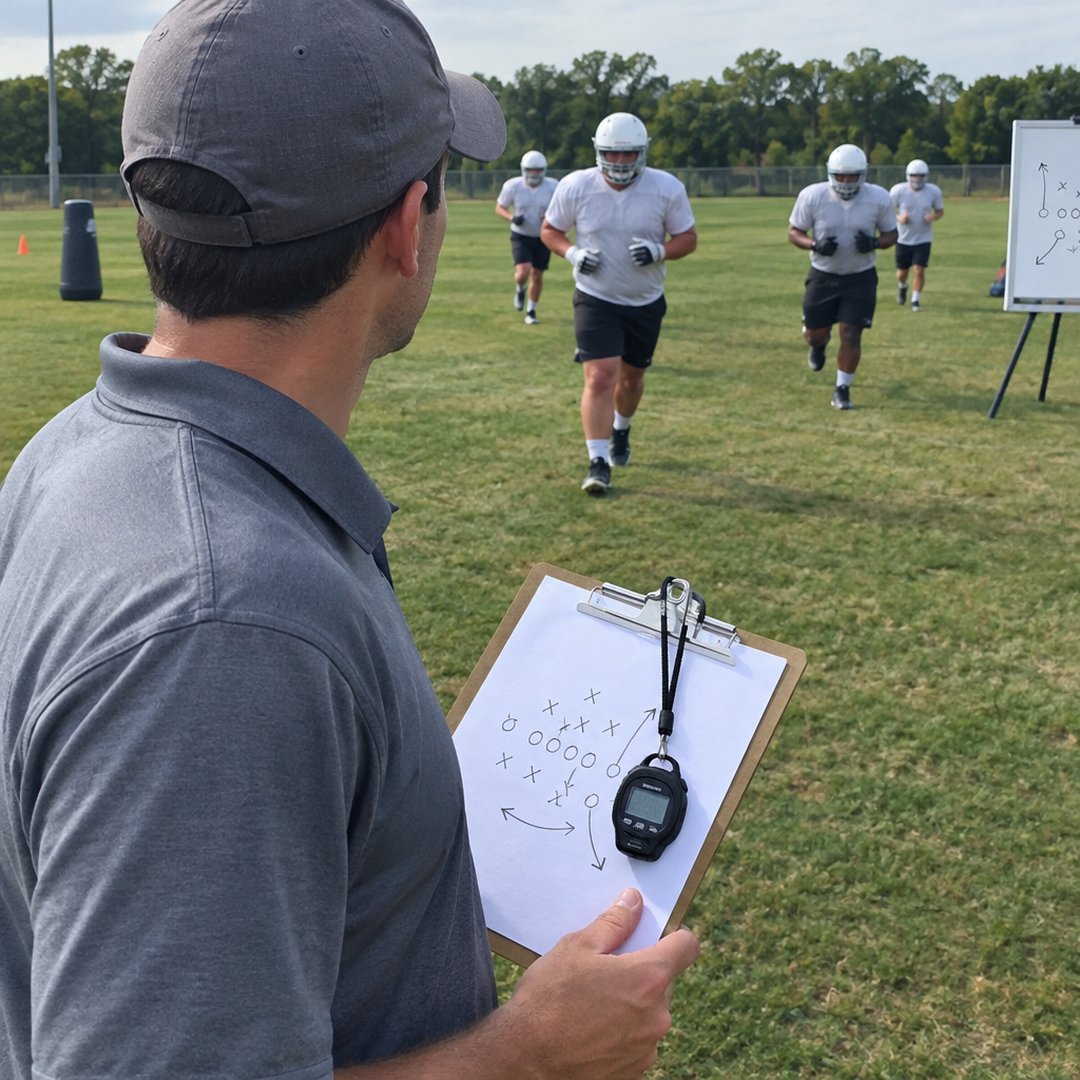
Sunday night, you open the PDF on your laptop and read the safety chapter and the plain-words chapter. You fill in the coach's homework checklist: your terms on one page, Power from the I, the stance for your guards and center, and the blocking rules for your level written in plain words.
Monday, you print the Power rule table and the Week 1 page and clip them to your board. Day 1 is a walk-through against air: each player says his rule out loud before the snap. Indy is Stance and Start, First Step Race and Down Block on a Bag. You never raise the contact level above a walk in team.
By Wednesday, your fullbacks join the Pull and Kick drill and your guards are pulling flat on the Pull Line. Half-line runs at Control Contact. At the end of the walk-through, you show a scout card for three seconds and your center calls the front. Your tackles echo it.
Thursday, the scout team shows random fronts. Friday, you call the front and your linemen call their blocks. You check the Week 1 boxes: every lineman can say his Power rule against four fronts, doubles stay hip to hip, pullers stay flat. Next week, Counter adds a second puller on top of a front side your players already know.
| Starting from scratch | Free videos and scattered posts | The Gap Scheme Playbook | |
|---|---|---|---|
| Structure | Whatever you can draw and remember | Pieces from different coaches, in different words | 13 chapters in one order, from safety to game day |
| Time to start | Nights of drawing before Day 1 | Hours of searching and sorting | Read the first six chapters, then run Day 1 |
| Printable | Your own notes | Screens, not pages | 78 printable pages, rule tables and checklists included |
| Covers four fronts | Only the fronts you draw | Whatever each clip happens to show | Power, Counter and Trap against the 4-3 over, 4-3 under, 3-4 and 4-2-5 |
| Install plan and drills | You build them | Scattered, if you find them | 15 practice days and 20 drills with contact levels |
| Cost | Your time | Free, plus your time | $37, one-time |
Print the rule tables tonight and run Day 1 of the install at your next practice.
After you click the button, you can add any of these to your order. Each one is $17, added in the next step, or all three as the Complete Bundle for $22 (save $29).
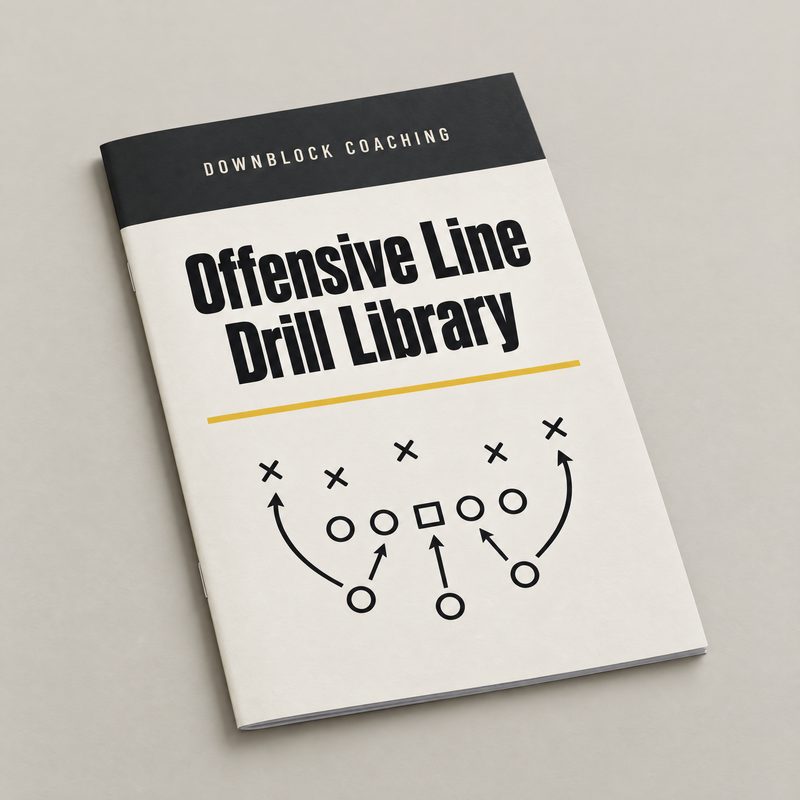
40 drills in 7 groups, from stance and start to pulling and pass protection basics. Each drill lists players, equipment, contact level, setup, coaching points, common mistakes and cues, with 19 diagrams, so your indy period never runs out of work.

The zone step, covered and uncovered rules, combos and the backside cutoff, drawn against four fronts and a slant. It adds a two-week install, 8 drills and a chapter on pairing zone with your gap schemes.

Six tabs: a weekly practice plan with automatic start times, an individual period script, play-by-play grading with a 1 or 0 for each lineman, a grade scale and a summary by game and season.
Power, Counter and Trap chapters: rules by position, 12 diagrams against four fronts, adjustments, mistakes and cues.
Double team and pulling chapters: the two skills that decide every gap scheme, with 8 diagrams.
Stance, start and footwork chapter: the base every block grows from, with a checklist.
Safety and legal blocking chapter: hands inside, head out of contact, Levels of Contact and a rule book checklist for your level.
3-week install plan: 15 practice days with periods, minutes and weekly checklists.
20 gap scheme drills: one diagram per drill, ready to run in your indy period.
Game-day checklist and 37-term glossary: print them and keep them on your clipboard.
$97 Today: $37, one-time
Pay with card, Apple Pay or Google Pay. Secure checkout by Stripe.
Read it, draw it on your whiteboard, take it to practice. If The Gap Scheme Playbook is not right for your line room, email productadvice.info@gmail.com within 14 days of purchase with the email you used at checkout. We will refund your payment for the playbook in full, back to the original payment method. No forms, no hassle.
Written for the coach behind the line. The playbook is written for youth, middle school, high school and small college line coaches, in plain words you can say out loud at practice.
Safety first, from public guidance. The safety chapter follows public coaching resources from USA Football (Blocking and Defeating Blocks, Levels of Contact, and Concussion Recognition and Response) and the CDC HEADS UP guidelines, and it sends you to the current NFHS rule book or the code your league uses. Every source is listed on the last page.
Every block above the waist. Power, Counter and Trap are taught with the hands inside and the head out of contact. No scheme in the book needs a low block.
Drawn the same way every time. All 41 diagrams use one picture of the field, one set of labels and plays drawn to the right unless the caption says otherwise, so your linemen learn to read them once.
Built to be changed. Fill-in lines and margins are there for your own calls and notes. The best cue is the one your players already understand.
Football is a contact sport with a risk of injury. This playbook is educational coaching information, not legal or medical advice. Rules on blocking below the waist, chop blocks, clipping and practice contact differ by level, state association and league, so check the current rule book before you install anything. Match every drill and contact level to the age, size and experience of your players. Follow your league's concussion, heat and emergency action rules, and follow a qualified medical professional on any injury. When in doubt, sit him out. Downblock Coaching is not affiliated with or endorsed by USA Football, the NFHS or any league or association.
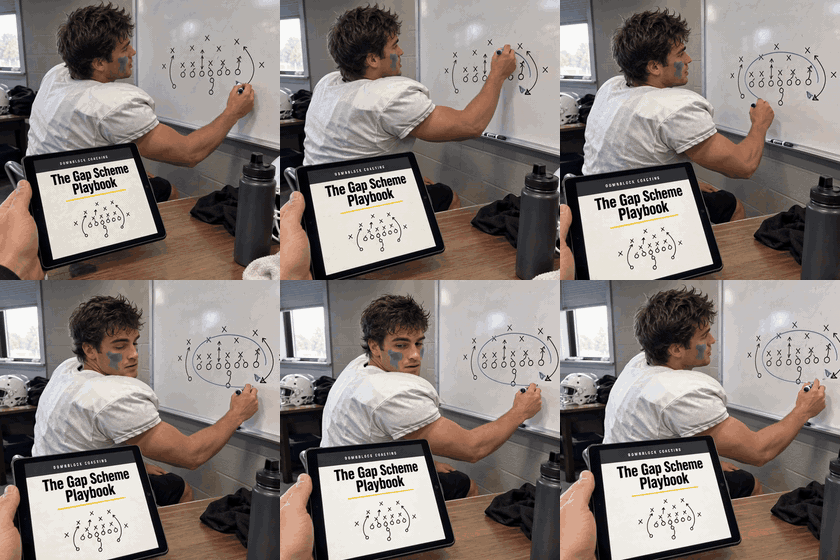
Power, Counter and Trap, rules by position, a 3-week install and 20 drills, ready to print tonight.